
ROUTINE DENTAL EXAMS
Keep An Eye On
What Changes Over Time.
A continuous diagnostic baseline engineered to detect subtle clinical shifts early, protecting your long-term oral stability through disciplined preventive monitoring.
Established NW Portland Practice · Comprehensive Clinical Baseline · Welcoming New Patients
LONGITUDINAL CLINICAL OVERSIGHT
A Routine Exam Is About
Watching For Change.
A periodic dental evaluation is not a detached, static inspection. For established patients, every visit is a comparative analysis against your established baseline records, capturing microscopic shifts before they become structural problems.
01. EMERGING PATTERNS
Identifying New Symptoms Early
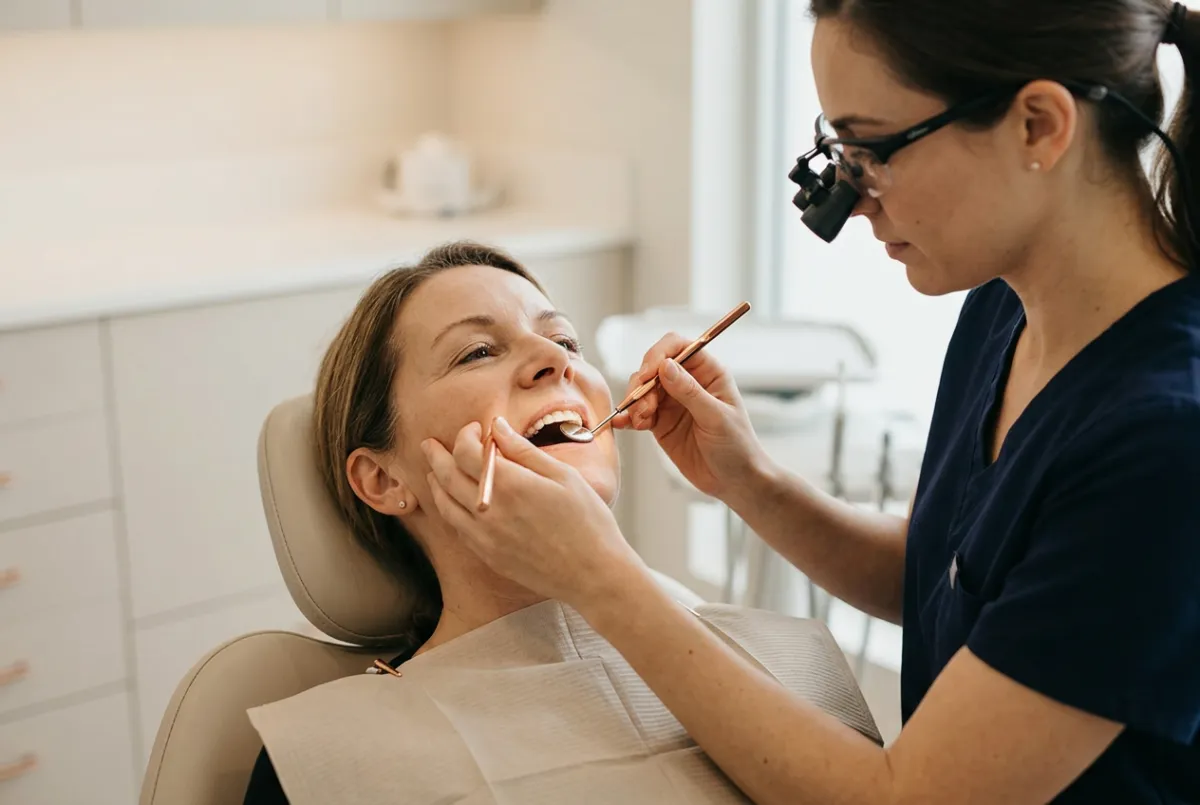
Oral discomfort rarely announces itself loudly at the start. Fleeting thermal sensitivity, micro-fractures in enamel, or faint bite disharmonies are evaluated during routine exams while treatment remains conservative and non-invasive.
02. HISTORICAL TRACKING
Previous Areas of Concern
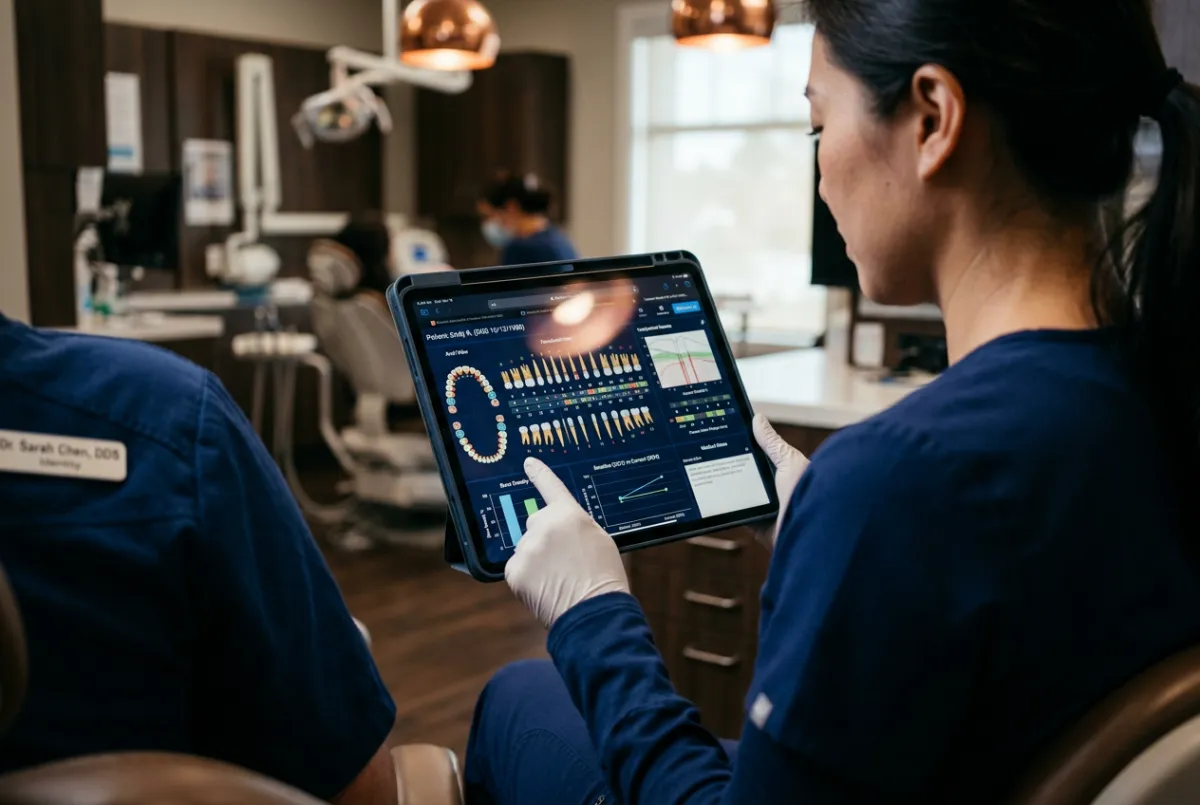
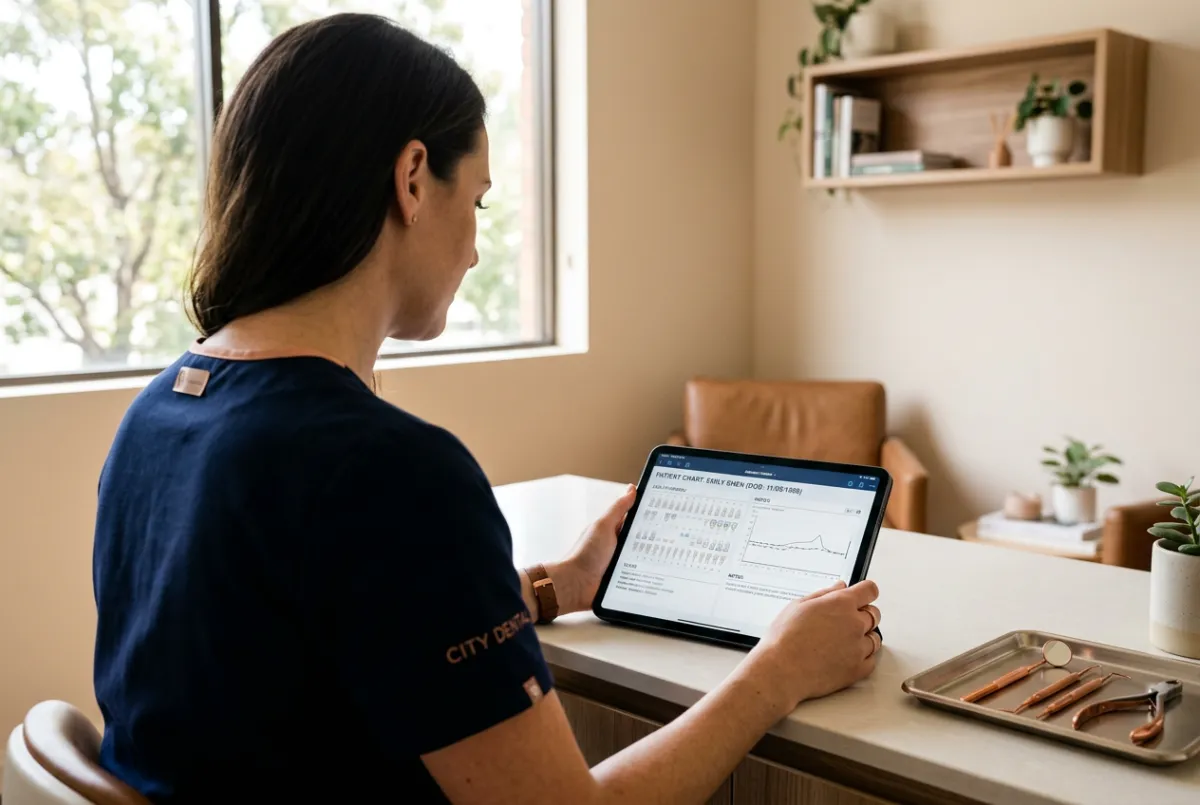
When a past exam identifies a watch area, we don't rush into premature treatment. Instead, we establish clinical benchmarks and measure trajectory across successive visits, confirming whether an area remains stable or necessitates intervention.
Continuity of care is your greatest diagnostic advantage. Knowing your mouth over time is what turns routine exams into precise preventive medicine.
03. STRUCTURAL INTEGRITY
Monitoring Existing Restorations
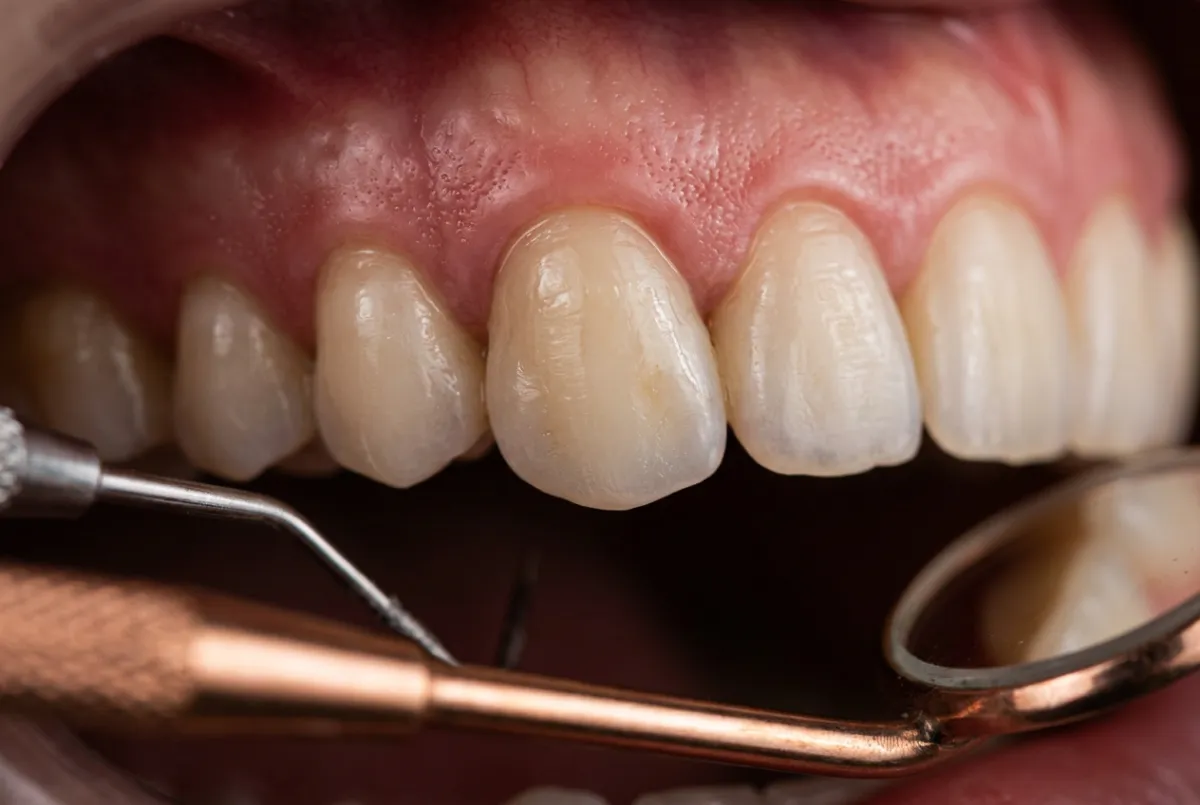
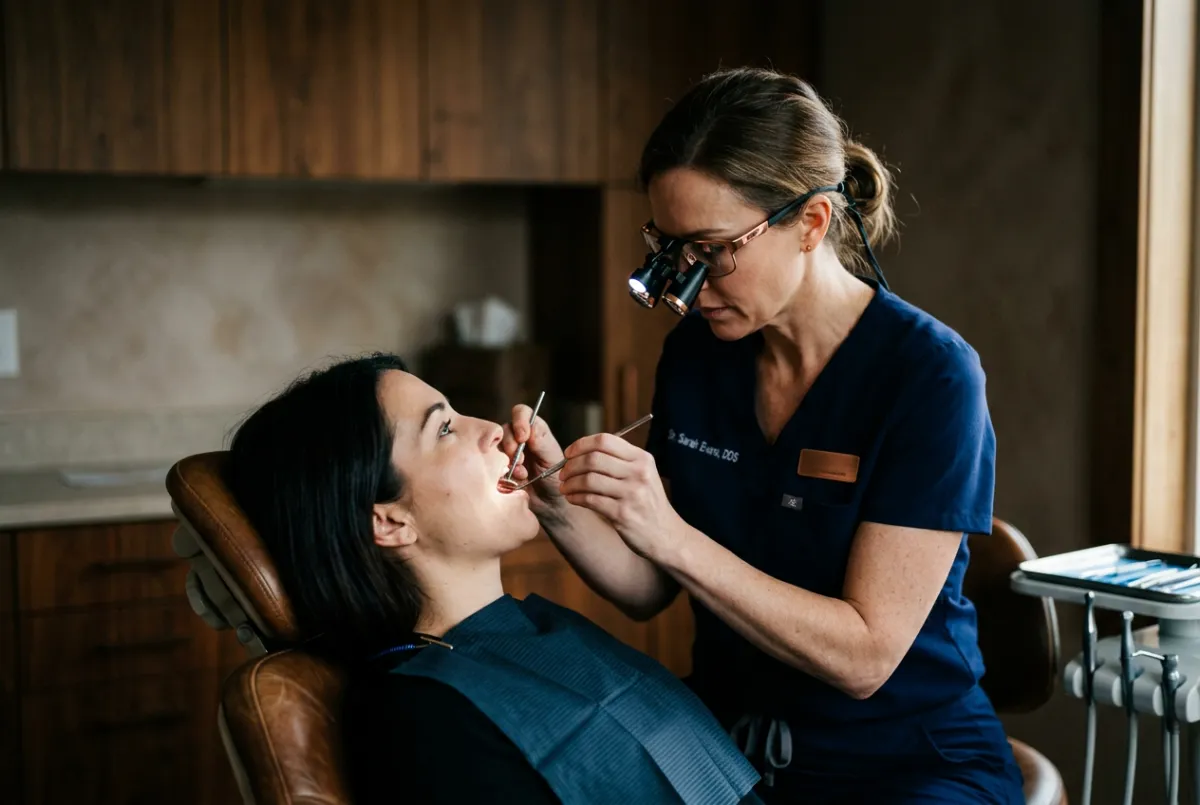
Dental restorations endure immense mechanical stress every day. We examine crowns, onlays, and composite margins under magnification to verify seal integrity, ensuring sub-surface breakdown or micro-leakage is resolved before underlying tooth structure is compromised.
04. SYSTEMIC HEALTH INSIGHTS
Observing Overall Oral Changes
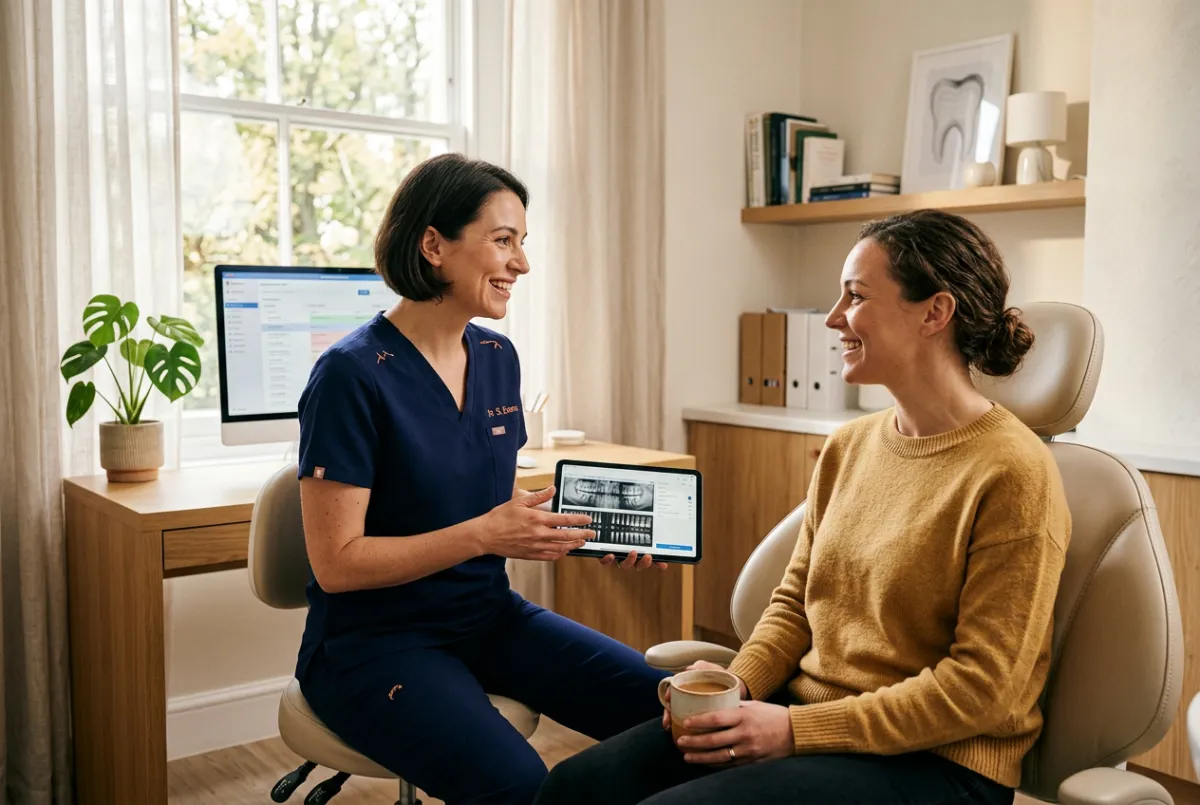
Your mouth reflects systemic wellness, lifestyle evolution, and natural aging. Tracking soft tissue character, salivary balance, and bone density trends over years provides a protective barrier against silent conditions that develop without noticeable pain.
COMPREHENSIVE CLINICAL OVERSIGHT
More Than
Just Cavities.
Every routine visit systematically audits six distinct biological and structural checkpoints to identify subtle micro-changes long before they become invasive issues.
CHECKPOINT 01 : ENAMEL & DENTIN
Natural Teeth
High-magnification tracking of micro-fractures, enamel demineralization, internal discoloration, and developmental structural fissures across all quadrants.
CHECKPOINT 02 : RESTORATION INTEGRITY
Fillings & Crowns
Tactile inspection of restorative margins, ceramic bonding, composite edge wear, and secondary leak detection to prevent structural failure.
CHECKPOINT 03 : PERIODONTAL BASE
Periodontal Health
Precise millimeter charting of pocket depths, gum recession patterns, tissue firmness, and subtle indicators of underlying systemic inflammation.
CHECKPOINT 04 : OCCLUSAL DYNAMICS
Bite & Wear Patterns
Analysis of nocturnal grinding facets, clenching force distribution, enamel shearing, and early jaw-joint (TMJ) strain markers.
CHECKPOINT 05 : MUCOSAL SCREENING
Oral Tissues
Thorough visual and manual screening of the tongue, palate, inner cheeks, and salivary glands for cellular anomalies and pre-cancerous lesions.
CHECKPOINT 06 : SYMPTOM AUDITING
Patient Concerns
Dedicated discussion and diagnostic evaluation of transient sensitivity, chewing discomfort, aesthetic goals, and everyday functional changes.
PREVENTIVE PHILOSOPHY
A Routine Exam Is About
Watching For Change.
Oral health is dynamic, not static. Regular appointments create a chronological health baseline, allowing us to spot silent structural and tissue shifts long before discomfort occurs.
01 / SILENT SYMPTOMS & EARLIEST SHIFTS
Problems Rarely Begin With Discomfort
Most oral changes develop quietly beneath the enamel or below the gumline. By comparing subtle tissue color variations, localized micro-wear, and new pocket depths across appointments, we catch conditions at Stage 0 rather than waiting for acute pain.
Routine Doesn't Mean Unimportant.
Consistency is what turns a quick visual evaluation into an active diagnostic defense against complex dental surgery.
02 / CONTINUITY & RESTORATION STABILITY
Tracking Past Concerns and Restorations
Every filling, crown, and watch-spot has a lifespan and a behavior history. When we see you routinely, we aren't starting from scratch: we assess how existing restorations are holding up under bite force and whether monitored spots remain completely stable.
- Checking margin seals on aged fillings and bonded crowns
- Monitoring enamel wear patterns from nocturnal clenching
- Evaluating previous micro-lesions to confirm remineralization
03 / SYSTEMIC & ORAL CONVERGENCE
Overall Oral Health Dynamics
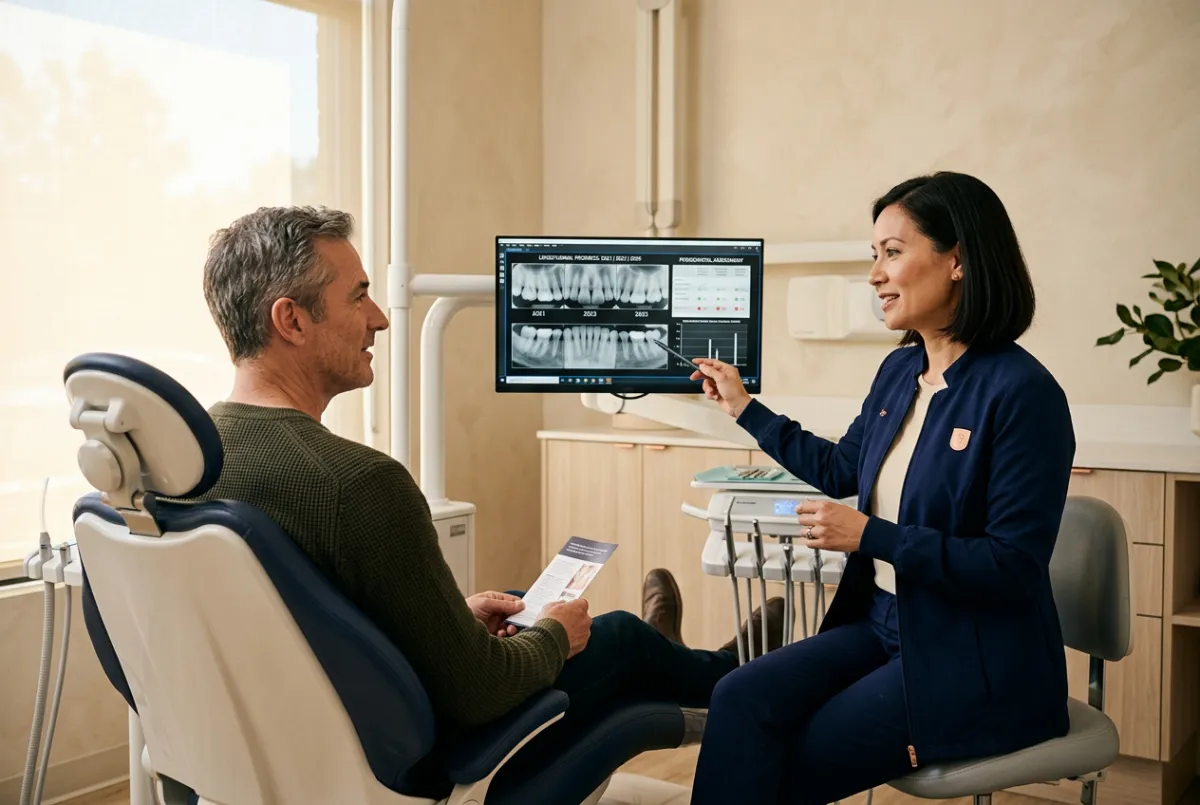
Medication updates, dietary shifts, and lifestyle changes directly influence salivary flow, mucosal resilience, and oral pH. Regular examinations provide the continuous insight required to adjust your personalized prevention plan in real time.
DIAGNOSTIC CRITERIA & SCOPE
Routine Monitoring
Or A Fresh Baseline?
Every clinical encounter serves a deliberate purpose. Distinguishing ongoing recall surveillance from an exhaustive baseline examination ensures targeted, conservative preventive care.
PERIODIC RECALL · ESTABLISHED PATIENTS
What Has Changed?
Routine exams are comparative surveillance checkpoints. Because we already maintain your historical baseline, our focus is pinpointing incremental transitions, micro-fractures, margin degradation, and early pocket depth fluctuations before symptoms arise.
- Direct longitudinal comparison against prior chart data
- Targeted 2-4 bitewing radiographs for interproximal monitoring
- Structural stress checks on existing fillings, inlays, and crowns
- Spot-probing and gingival stability tracking across recall cycles
COMPREHENSIVE BASELINE · NEW OR EXTENDED ABSENCE
Where Are We Starting?
When you are new to the practice or returning after a gap in care, we build a master clinical inventory. We measure baseline periodontal architecture across every tooth, evaluate occlusal load, and document anatomy from zero.
- Complete 6-point circumferential periodontal depth charting
- Full-mouth radiographic series (FMX) and panoramic mapping
- TMJ range-of-motion, muscle palpation, and airway assessment
- Creation of permanent benchmark records for all future surveillance
THE DUAL-DISCIPLINE PROTOCOL
Exams And Cleanings Work Together
While scheduled during the same appointment, a dental exam and a professional cleaning perform distinct clinical functions. The dental hygienist delivers targeted therapeutic hygiene: ultrasonic disruption of bacterial biofilm and supragingival calculus removal. The dentist performs diagnostic oversight: interpreting radiographs, evaluating tissue biology, and diagnosing structural pathology. Neither procedure can replace the other; true oral stability requires both.
YOUR ROUTINE CHECK-IN
Due For Your
Next Dental Exam?
Preventive dentistry works best when it is consistent. Whether it has been six months or several years since your last visit, our clinical team provides a thorough, judgment-free evaluation to keep your oral health steady and predictable.
Direct Insurance Coordination • Digital Imaging Records • Located in Northwest Portland

Redefining the dental patient experience with architectural minimalism and Pacific Northwest warmth.
Office Hours
Monday: 7:00 AM - 4:00 PM
Tuesday: 7:00 AM - 4:00 PM
Wednesday: 7:00 AM - 4:00 PM
Thursday: 7:00 AM - 4:00 PM
Friday: Closed
Saturday: Closed
Sunday: Closed
Location Details
Phone: (503) 228-6294
Address: 2311 NW Northrup St. Suite 101 Portland, OR 97210
Email: [email protected]
Contact Information


© 2026 Northwest Portland Dental. All rights reserved. | Privacy Policy | Accessibility