
RESTORATIVE DENTISTRY
Restore Strength.
Function. Confidence.
A meticulous, biologically respectful approach to rebuilding structural integrity, masticatory performance, and natural dental aesthetics in Northwest Portland.
Dr. Allert, DDS · Clinical Consultation & Biomimetic Restorations
WHEN RESTORATIVE CARE MAY HELP
When A Tooth
Needs More Than Prevention.
Enamel is resilient, but structural compromise requires precise diagnostic clarity. When hygiene and preventative regimens can no longer reverse biological degradation or physical fatigue, restorative intervention re-establishes structural balance, bite integrity, and long-term vitality.
Not Every Damaged Tooth Needs The Same Solution.
Restorative dentistry is not a generic prescription. Preservation begins with isolating the precise depth of damage, distinguishing between conservative onlays, full crowns, or root stabilization before a single surface is prepared.
THE NWPD APPROACH
Preserve What Can Be Preserved.
Restore What Needs Support.
Every clinical intervention begins with restraint. We prioritize the biology of your natural tooth structure above all else, deploying advanced biomimetic restorations only when structural reinforcement is genuinely required.
01
Understand the Problem
Rigorous diagnostics isolate underlying mechanical stress, decay, or instability before formulating any treatment proposal.
02
Protect Healthy Structure
We retain every millimeter of viable enamel and dentin, resisting aggressive reductions in favor of conservative retention.
03
Restore Function
Precision restorative materials mimic natural tooth flexure, load distribution, and bite mechanics with seamless biological integration.
04
Think Long Term
Every solution is planned for multi-decade durability, minimizing future re-treatment cycles and guarding against structural failure.
“The Goal Is Not The Biggest Treatment. The Goal Is The Appropriate Treatment.”
Clinical Restorative Standard : Northwest Portland Dental
RESTORATION OPTIONS
Different Problems.
Different Ways To Restore.
Every tooth structural condition requires an individualized restorative architecture. Select a primary pathway to explore structural indications and material protocols.
DIAGNOSIS FIRST
Treatment Starts
With Understanding The Problem.
Every restorative recommendation begins with thorough clinical observation. Rather than treating isolated symptoms in haste, we evaluate the underlying biological and mechanical causes to ensure long-term stability, comfort, and function.
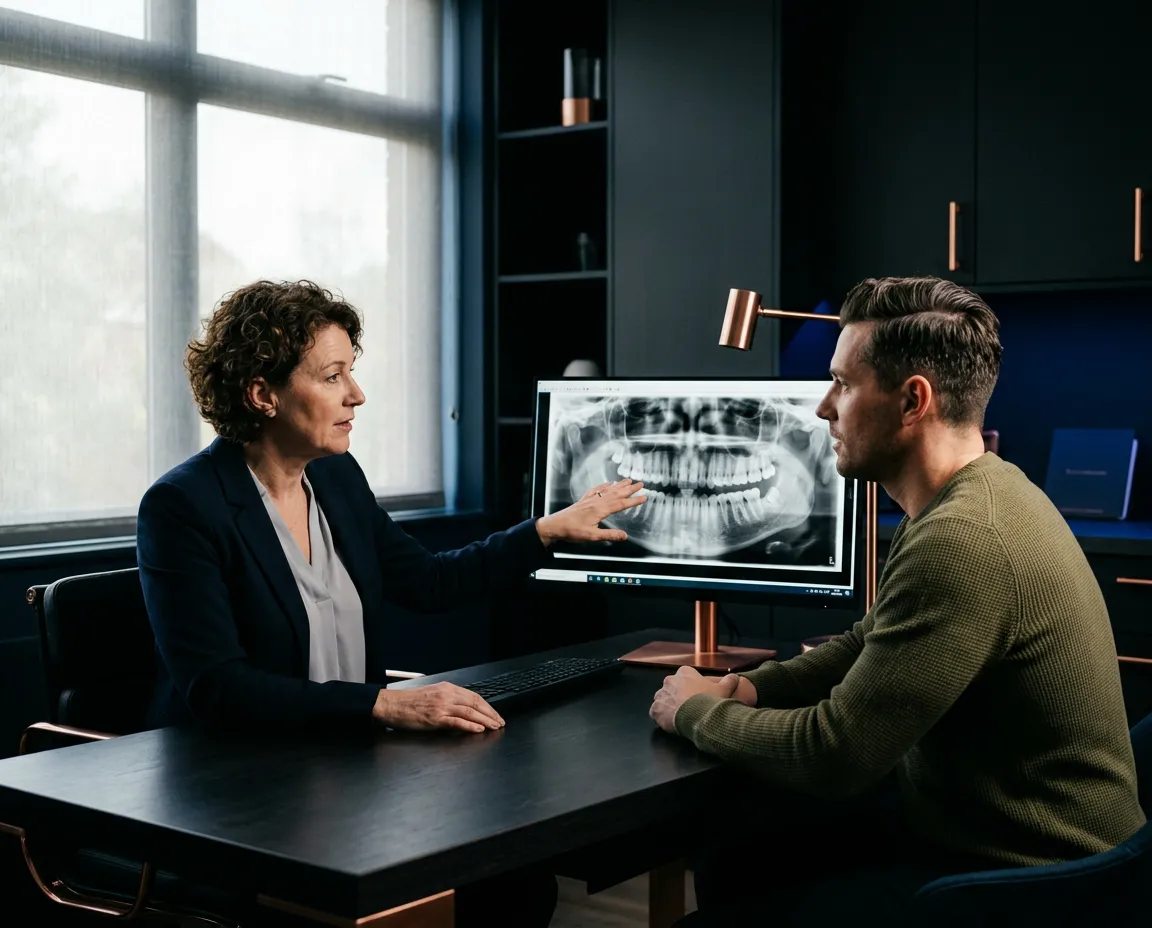
Listen
We begin by understanding your exact symptoms, past dental experiences, functional discomfort, and personal treatment goals without rushing.
Examine
A comprehensive tactile and visual assessment of tooth structure, existing restorations, soft tissue health, and occlusal contact points.
Image
High-resolution low-radiation digital radiographs and 3D intraoral imaging reveal sub-surface fractures, bone levels, and hidden decay.
Assess
Evaluating biomechanical forces, jaw alignment, remaining enamel thickness, and periodontal foundation to determine long-term prognosis.
Discuss
Transparent presentation of all viable clinical pathways, material choices, durability forecasts, and sequencing before any treatment begins.
The Right Plan Depends On More Than One Tooth.
A restoration succeeds only when integrated into a healthy, balanced oral system. Our treatment recommendations account for five key clinical factors:
- Biological Health: Stability of surrounding gum tissues and supporting alveolar bone
- Structural Integrity: Volume and quality of remaining natural tooth structure
- Functional Occlusion: Balanced bite dynamics and protection against shear forces
- Aesthetic Harmony: Seamless shade, contour, and translucency with neighboring teeth
- Predictable Longevity: Material selection engineered to withstand decades of daily use
Understand The Options Before You Decide.
We outline conservative alternatives alongside comprehensive reconstructions so you can make confident, fully informed choices for your oral health.
COMMON QUESTIONS
What Patients
Often Want To Know.
Clear, direct clinical clarity regarding restorative longevity, tooth preservation, and treatment expectations.
How do I know if a compromised tooth needs a direct filling, an onlay, or a full crown?
Our diagnostic philosophy prioritizes structural preservation. When remaining healthy enamel is substantial, we utilize conservative composite bonding. When a cusp is undermined or compromised by recurrent decay, a custom ceramic onlay restores structural strength without circumferential shaving. Full crowns are reserved exclusively for cases with severe structural compromise where 360-degree retention is biologically mandatory.
Can a cracked or fractured tooth be restored without root canal therapy or extraction?
Yes, provided the crack has not propagated vertically into the pulpal chamber or root root structure. Superficial and coronal fractures are stabilized with high-strength lithium disilicate or monolithic zirconia restorations that bind remaining cusps together, preventing fracture progression and shielding the internal nerve tissue.
What is the expected longevity of modern ceramic and zirconia restorations?
Engineered bio-compatible ceramics and zirconia typically function exceptionally well for 15 to 20+ years when supported by meticulous margin sealing, balanced occlusal adjustment, and routine professional maintenance. Because our materials mimic natural enamel elasticity, long-term wear against opposing natural dentition is minimized.
If a tooth has already been lost, how does a dental implant compare to a bridge?
A single-tooth dental implant replaces both root and crown independently without touching or shaping adjacent healthy teeth, while preserving underlying jawbone density. A fixed ceramic bridge remains an excellent alternative when adjacent teeth already carry extensive restorations or when bone anatomy favors non-surgical replacement.
How do you ensure seamless color and texture integration with my natural teeth?
Every custom restoration involves high-definition shade-mapping, multi-angle clinical photography, and precise ceramic layering. We replicate micro-translucency, subtle surface mamelons, and natural fluorescence so the completed restoration blends indistinguishably alongside your surrounding dentition under all lighting conditions.
More Ways We Can Care For Your Smile
Comprehensive general, restorative, and specialized clinical treatments delivered with modern precision.
RESTORE YOUR SMILE
Let's Understand
What Your Tooth Needs.
Every successful restoration starts with a thorough diagnostic evaluation. We identify the exact structural needs of your tooth before recommending conservative, long-lasting treatment options tailored to your oral health.
Compassionate diagnostic consultations • Direct insurance coordination • Downtown Portland
Redefining the dental patient experience with architectural minimalism and Pacific Northwest warmth.
Office Hours
Monday: 7:00 AM - 4:00 PM
Tuesday: 7:00 AM - 4:00 PM
Wednesday: 7:00 AM - 4:00 PM
Thursday: 7:00 AM - 4:00 PM
Friday: Closed
Saturday: Closed
Sunday: Closed
Location Details
Phone: (503) 228-6294
Address: 2311 NW Northrup St. Suite 101 Portland, OR 97210
Email: [email protected]
Contact Information


© 2026 Northwest Portland Dental. All rights reserved. | Privacy Policy | Accessibility