
DENTAL FILLINGS
Repair Decay.
Preserve What's Healthy.
Every tooth possesses natural strength that can never be truly replicated. Dr. Allert utilizes advanced bio-compatible composites and micro-invasive techniques to arrest decay while preserving maximum natural enamel.
Conservative Restorative Care · Bio-Compatible Composites · NW Portland Clinic
UNDERSTANDING DENTAL FILLINGS
Small Areas Of Damage
Still Deserve Attention.
A dental restoration is not an aggressive intervention: it is a precise, conservative repair designed to stop localized degradation, protect delicate nerve pathways, and preserve your natural tooth structure for decades to come.
“The Goal Is To Repair The Damage Without Removing More Tooth Than Necessary.”
01. Active Tooth Decay
Bacterial demineralization compromises enamel and dentin. Early composite intervention halts microbial progression and seals the tooth before deep pulp infection occurs.
02. Small Chip or Fracture
Micro-trauma or sudden biting pressure can shear unsupported enamel margins. Seamless direct bonding restores anatomical contour, eliminates roughness, and prevents further structural fracturing.
03. Old Restoration Breakdown
Aged amalgam or failing resin margins experience microscopic leakage and marginal gaps. Replacing fatigued restorations eliminates hidden recurrent decay beneath the existing material.
04. Localized Enamel Wear & Abrasion
Friction from clenching or aggressive toothbrushing can create cervical notches (abfraction). Targeted composite placement insulates exposed root surfaces against acute thermal sensitivity.
05. Proactive Restorative Need
Deep developmental grooves that trap debris before deep decay sets in can be conservatively treated with flowable composite, pre-empting the need for extensive future cavity excavation.
UNDERSTANDING DENTAL FILLINGS
Small Areas Of Damage
Still Deserve Attention.
A direct composite restoration rebuilds lost enamel and isolates active bacteria before decay migrates into inner pulp chambers. Conservative treatment preserves the healthy biologic foundation of your tooth.
“The Goal Is To Repair The Damage Without Removing More Tooth Than Necessary.”
Clinical Decision Framework: Filling vs. Crown
A direct composite filling is indicated when more than 50% of the natural tooth cusp remains intact. When structural fractures or compromised cusps threaten tooth integrity under bite force, an indirect full-coverage crown is recommended to prevent non-restorable tooth loss.
01 : DIAGNOSTIC EVALUATION
Bite Forces, Gum Health & Symptom Review
Before preparing any tooth, we assess occlusal force load, surrounding periodontal attachment, and thermal sensitivity. This precise assessment ensures a composite restoration will thrive under daily chewing stresses.
02 : TOOTH CONSERVATION
Active Decay & Early Restorative Repair
Targeted debridement eliminates localized bacterial lesions while bonded micro-hybrid resin seamlessly fuses to unaffected dentin, sealing margins against future microleakage.
03 : STRUCTURAL INTEGRITY
Small Chips, Fractures & Localized Wear
Enamel chips and minor bite-edge attrition expose vulnerable inner layers. Composite bonding reshapes functional anatomy and halts progressive micro-fractures before structural breakdown occurs.
04 : CLINICAL MONITORING & REPLACEMENT
Aging Restorations & Secondary Margin Gaps
Over time, old amalgam or composite margins experience cyclic fatigue and microscopic ditching. Proactive replacement stops silent recurrent decay from compromising deeper healthy tooth structure.
STEP-BY-STEP PROTOCOL
A Focused Process
To Repair The Tooth.
Restoring decayed tooth structure is a methodical discipline. We prioritize structural preservation, gentle isolation, and exact anatomical replication at every phase.
01
Evaluate
High-magnification clinical inspection and targeted digital imaging map the precise depth and perimeter of decay, confirming whether a conservative filling is the optimal intervention.
02
Prepare
The tooth is gently numbed and isolated. Affected tooth structure is carefully removed with micro-conservative tools, thoroughly preserving surrounding healthy enamel and dentin.
03
Restore
Restorative resin is layered incrementally and cured with precision light. [VERIFY NWPD FILLING MATERIAL: Tooth-colored bio-compatible composite resin matched to your natural shade].
04
Check the Bite
Using ultra-thin articulating paper, the restoration is micro-adjusted to fit your natural occlusion perfectly, eliminating high spots and ensuring seamless comfort when chewing.
Clinical Precision Note: Northwest Portland Dental uses tooth-colored, biocompatible composite resin formulated for long-term wear resistance and seamless shade integration. [VERIFY NWPD FILLING MATERIAL].
AFTER YOUR FILLING
Protect The Tooth
After It Has Been Restored.
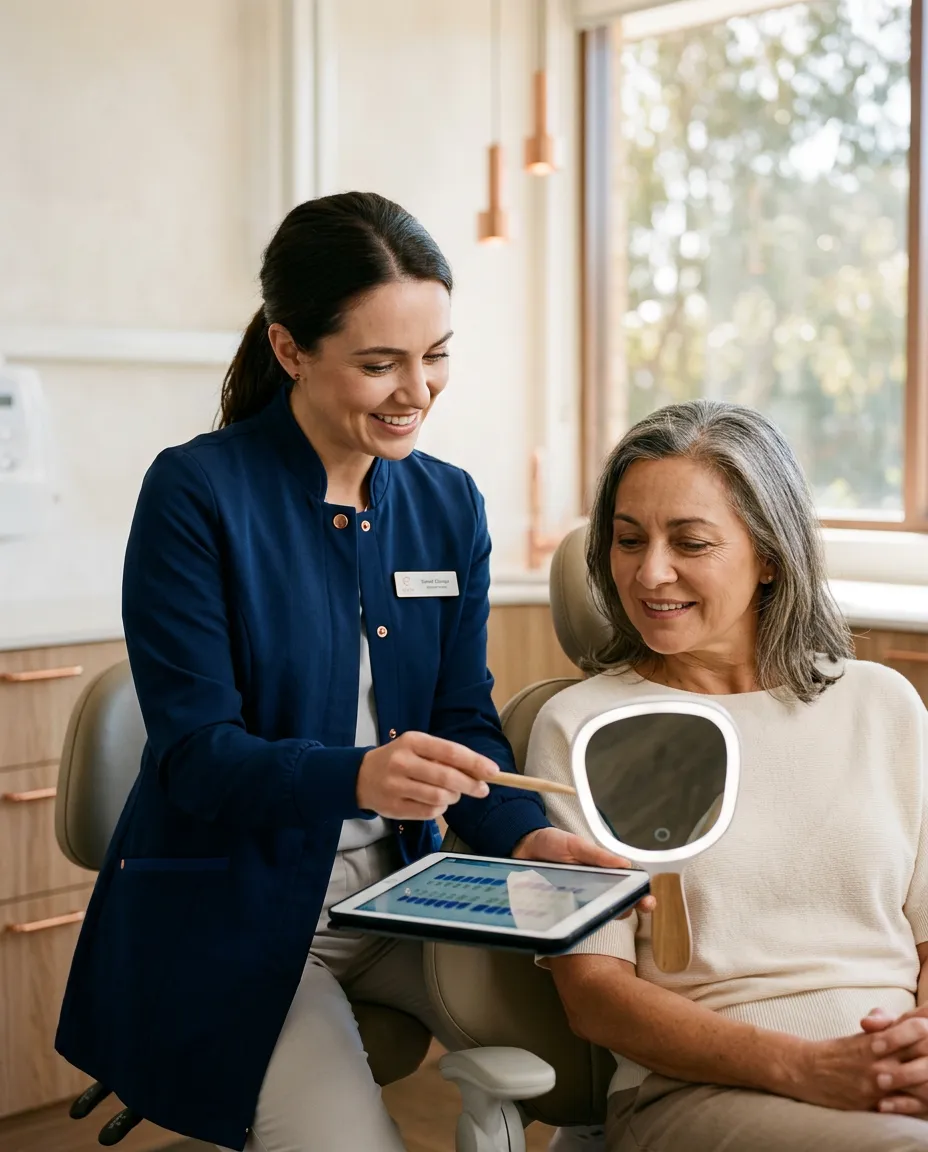
Because direct composite restorations cure instantly chairside, the tooth is structurally stable immediately. Following these clinical guidelines ensures optimal tissue recovery and lasting marginal seal:
- Delay chewing firm or hot foods until local anesthesia has fully cleared (usually 2-4 hours).
- Mild thermal sensitivity to cold liquids is normal for 3-7 days as the dental pulp settles.
- Brush and floss normally around the restoration: composite materials bond completely on placement.
- Contact our office immediately if your bite feels elevated or uneven when closing your teeth.
TREATMENT ESCALATION
Sometimes The Tooth Needs More Support
Fillings are designed for minor to moderate enamel and dentin loss. When decay compromises more than half of the natural cusp structure, or if bacterial penetration reaches the vascular pulp chamber, direct filling material can no longer support functional occlusal loads safely.
In these situations, our conservative protocol transitions to advanced restorative therapies designed to preserve the biological root structure rather than risking catastrophic fracture.
COMMON QUESTIONS
What Patients
Often Want To Know.
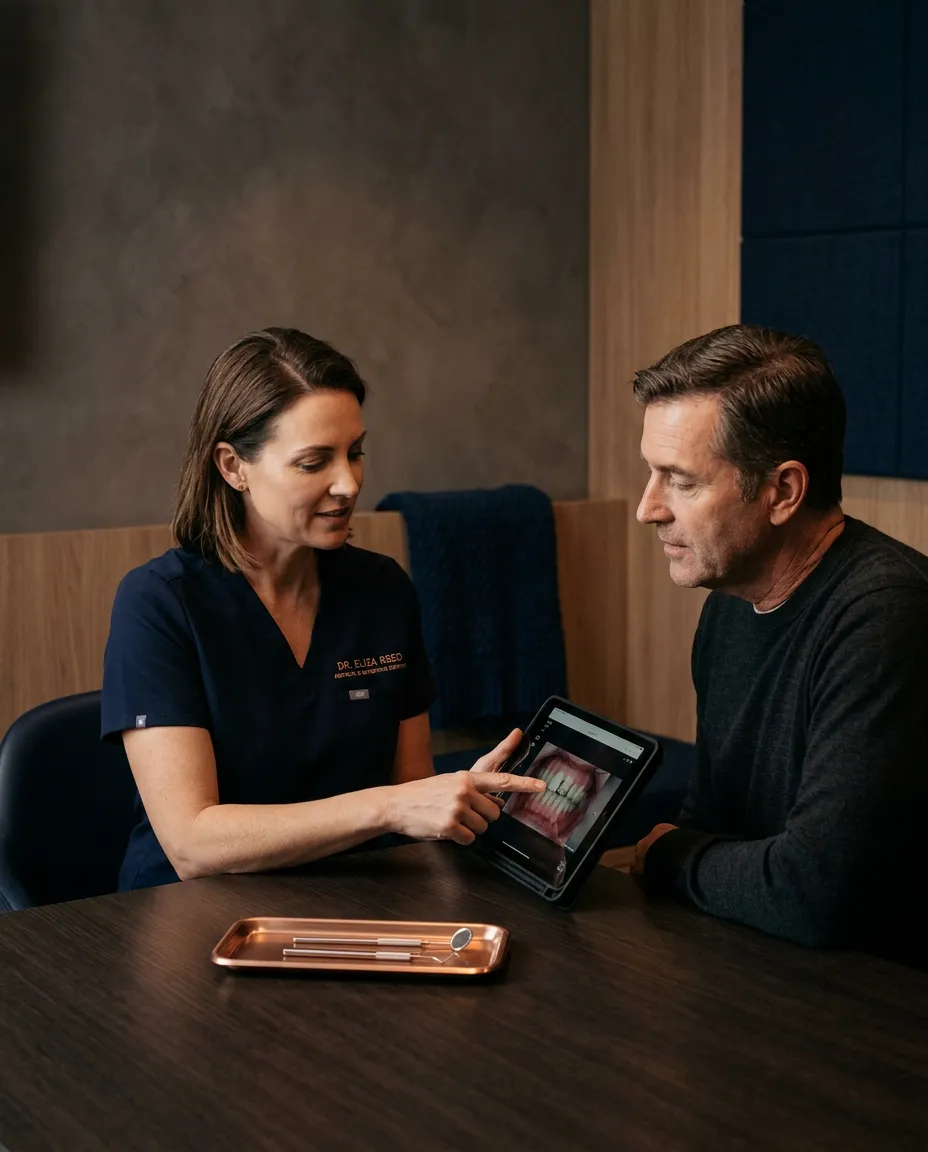
Clinical transparency is central to our practice. Here are clear, straightforward answers regarding composite restorations, longevity, and patient comfort.
How long do tooth-colored composite fillings typically last?
With disciplined home care and routine preventive visits, modern micro-hybrid composite fillings typically last 7 to 10 years or longer. Longevity depends significantly on tooth location, bite forces, and dietary habits.
Will I feel any pain or discomfort during the filling procedure?
Not at all. We utilize gentle, targeted local anesthesia to ensure the entire treatment area is completely numb before beginning. Most patients report feeling only light pressure and gentle water irrigation during the preparation.
Is tooth sensitivity normal after getting a new filling placed?
Mild temperature sensitivity to hot or cold is normal for a few days up to two weeks following treatment as the nerve settles. If sensitivity persists beyond two weeks or if your bite feels uneven, a quick minor adjustment resolves it immediately.
What is the primary clinical difference between composite and amalgam?
Composite resin bonds micromechanically to natural enamel and dentin, allowing us to preserve significantly more natural tooth structure while matching your exact tooth shade. Amalgam requires mechanical undercuts and does not bond directly to tooth enamel.
How soon after my filling appointment can I eat and drink?
Because composite resin is completely light-cured and hardened immediately in our operatory, you can chew right away once local numbness wears off. We recommend waiting until numbness fully subsides to prevent accidental cheek or lip biting.
Does dental insurance cover tooth-colored composite restorations?
Most standard dental insurance plans provide substantial coverage for composite restorations. Our administrative team verifies your specific benefit schedule beforehand and provides transparent cost breakdowns with zero surprise fees.
RESTORATIVE DIRECTORY
Alternative Restorative Options
When tooth wear, fracture, or deep decay extends beyond standard direct fillings, we offer specialized restorative treatments.
Dental Bridges
Fixed prosthetic solutions anchored to adjacent teeth to seamlessly replace one or more missing teeth.
Porcelain Crowns
Full-coverage ceramic restorations designed to reinforce and protect severely compromised or cracked teeth.
Root Canal Therapy
Gentle endodontic treatment to clear infection within the inner pulp chamber and save your natural tooth.
Dental Implants
Biocompatible titanium fixtures permanently integrated into the jawbone for natural, lifelong tooth replacement.
Looking for full or partial arch tooth replacement? View our Custom Denture Options →
RESTORE + PRESERVE
Think You May
Have A Cavity?
Catching enamel demineralization early allows us to preserve maximum natural tooth structure. Schedule an evaluation with our clinical team to diagnose the tooth precisely and determine whether biomimetic restoration is indicated.
Compassionate, conservative dental care • Northwest Portland, OR

Redefining the dental patient experience with architectural minimalism and Pacific Northwest warmth.
Office Hours
Monday: 7:00 AM - 4:00 PM
Tuesday: 7:00 AM - 4:00 PM
Wednesday: 7:00 AM - 4:00 PM
Thursday: 7:00 AM - 4:00 PM
Friday: Closed
Saturday: Closed
Sunday: Closed
Location Details
Phone: (503) 228-6294
Address: 2311 NW Northrup St. Suite 101 Portland, OR 97210
Email: [email protected]
Contact Information


© 2026 Northwest Portland Dental. All rights reserved. | Privacy Policy | Accessibility