
ROUTINE DENTAL CLEANINGS
A Cleaner Smile.
A Healthier Foundation.
Staying ahead of oral inflammation starts with disciplined preventive care. Our clinical hygiene team pairs gentle, thorough precision with diagnostic depth to safeguard periodontal health and protect long-term systemic wellness.
Unhurried 60-minute visits · Comprehensive periodontal assessment included
UNDERSTANDING YOUR CLEANING
More Than
Polishing Your Teeth.
A routine dental cleaning is targeted clinical maintenance for generally healthy mouths. It is an intentional preventative procedure engineered to eliminate bacterial threats, verify tissue integrity, and sustain your baseline health before irreversible issues develop.
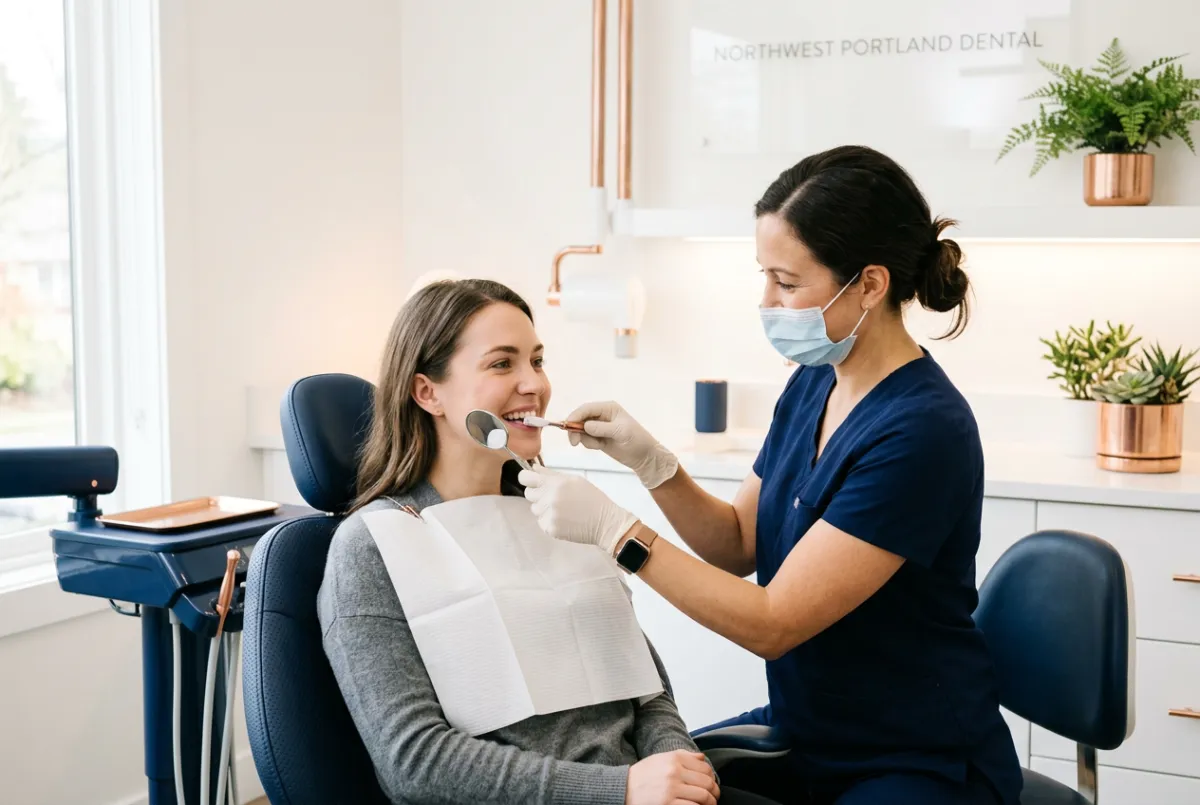
01. Supragingival Plaque Disruption
Systematic mechanical removal of the active bacterial biofilm from all visible enamel surfaces before colonies calcify or provoke tissue irritation.
02. Targeted Calculus Debridement
Ultrasonic instrumentation and precision hand scaling to dislodge hardened mineral deposits (tartar) above and gently at the gumline where bristles cannot reach.
03. Enamel Surface Micro-Polishing
Application of a specialized fine-grit polishing paste to lift external dietary stains and create a uniform surface that resists immediate recolonization.
04. Periodontal & Sulcular Health Review
Comprehensive diagnostic screening of pocket depths, attachment points, and tissue vascularity to confirm that bone levels remain stable and disease-free.
05. Tailored Home-Care Guidance
Direct, anatomy-specific calibration of your daily routine: selecting appropriate interdental brush dimensions and targeted techniques for difficult-to-reach contours.
WHY ROUTINE CLEANINGS MATTER
Healthy Gums Start
With Controlling Buildup.
Bacterial plaque hardens into calculus within 24 to 72 hours. Regular preventive cleanings physically eliminate this calcified buildup above the gumline before it triggers inflammatory gingivitis.
- Disrupts active biofilm colonies before tissue inflammation sets in
- Eliminates supra-gingival calculus that routine brushing cannot dislodge
- Maintains connective tissue attachment and prevents pocket formation
- Protects systemic vascular health by lowering oral bacterial burden
WHAT TO EXPECT
A Simple Visit
With A Bigger Purpose.
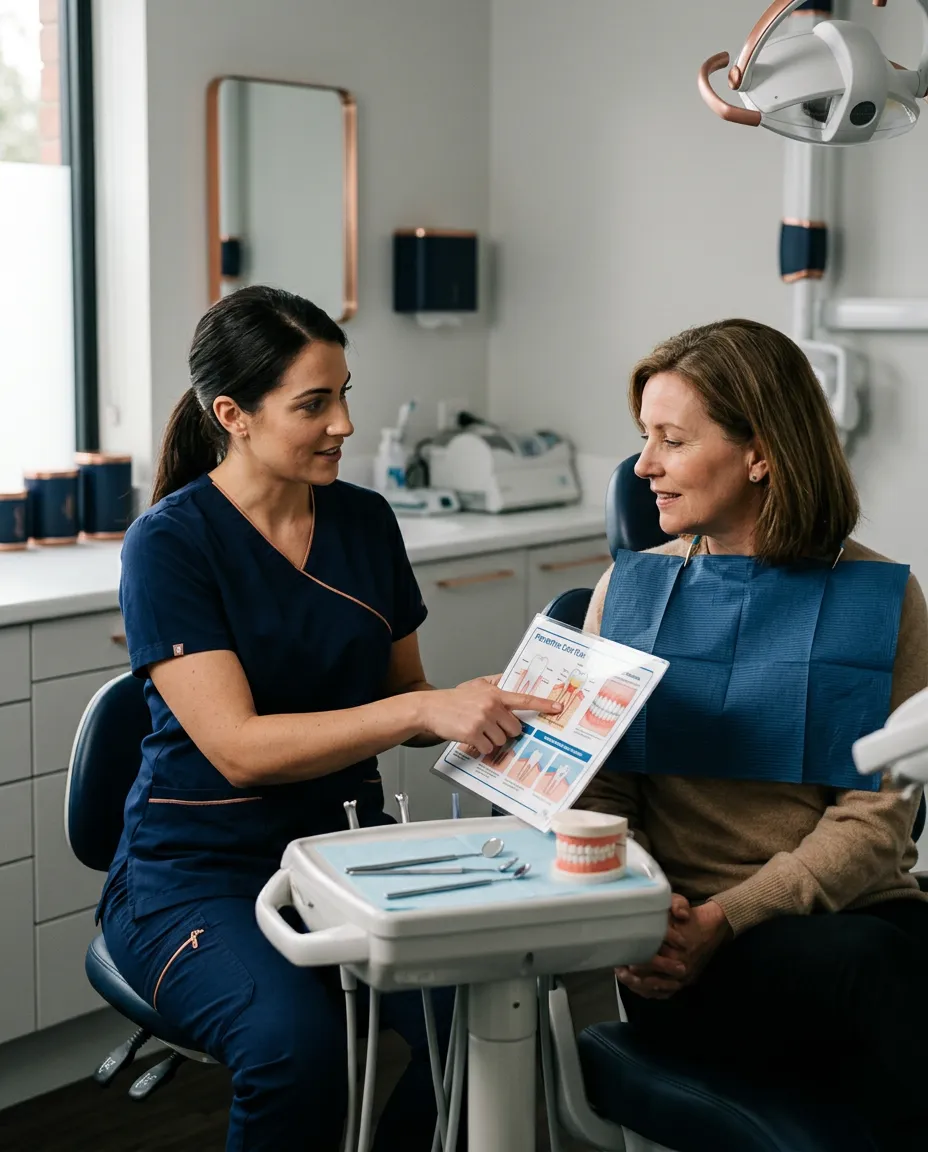
A preventive dental cleaning is a calculated sequence of clinical diagnostics, therapeutic debridement, and personalized patient guidance designed to safeguard systemic and oral wellness.
01
Review
We review updated medical histories, current medication regimens, and individual risk factors to tailor the cleaning protocol to your physiology.
02
Evaluate
Thorough assessment of periodontal pocket depths, tissue inflammation, and early indications of gingival vulnerability or bone loss.
03
Clean
Gentle ultrasonic and hand scaling to eradicate supragingival calculus, followed by micro-polishing to disrupt tenacious bacterial biofilms.
04
Educate
Personalized coaching on interdental cleaning tools, antimicrobial rinses, and custom recare intervals based on real-time findings.
Cleanings are typically paired with a comprehensive oral examination by the dentist.
ROUTINE VS PERIODONTAL CARE
The Type Of Cleaning
Should Match The Health Of The Gums.
Clinical cleaning protocols are determined entirely by diagnostic pocket depths, tissue inflammation, and bone architecture, ensuring precision preventive therapy for every clinical stage.
LEVEL 01 : PROPHYLAXIS
Routine Preventive
Supragingival scaling and polishing indicated for clinically healthy gum tissue without active pocketing or bone loss.
- Probing depths: 1 - 3mm
- Zero underlying bone resorption
- Routine 6-month interval recall
LEVEL 02 : GINGIVITIS
Gingivitis-Focused
Targeted debridement addressing localized or generalized bleeding, pseudo-pocketing, and active surface inflammation.
- Active marginal bleeding present
- No radiographic bone destruction
- Curative with refined home hygiene
LEVEL 03 : THERAPEUTIC
Periodontal Therapy
Scaling and root planing (SRP) beneath the gumline to eliminate hardened subgingival calculus and bacterial colonies.
- Probing depths: 4mm or deeper
- Active bone loss & root calculus
- Localized clinical anesthesia used
LEVEL 04 : ONGOING
Perio Maintenance
Ongoing supportive therapy post-SRP to disrupt pathogenic bacterial recolonization and prevent disease relapse.
- Follows completed active therapy
- Rigorous 3 to 4-month intervals
- Continuous pocket monitoring
CLINICAL AUTHORITY & INTEGRITY
A Different Cleaning Recommendation Is Not An Upsell.
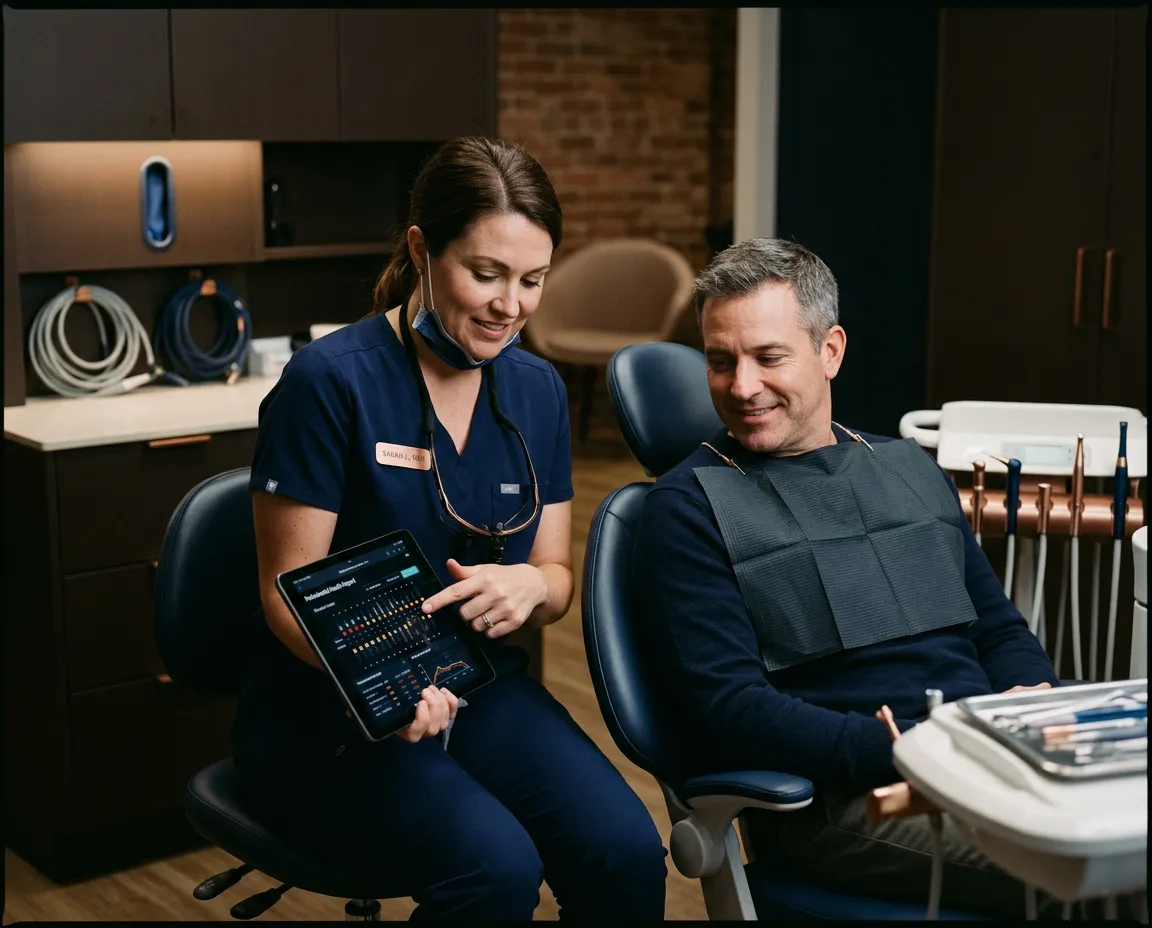
Performing a standard superficial polish in the presence of active periodontal infection violates clinical standards of care. When subgingival calculus and bone loss are documented, therapy below the gumline is medical necessity — not an optional elective.
COMMON QUESTIONS
What Patients
Often Want To Know.
How often should I realistically receive a routine cleaning?
For most patients with healthy periodontal tissues, a professional prophylaxis every 6 months prevents calculus buildup and early demineralization. However, if you show early signs of gingivitis or localized pocketing, our clinical team may recommend an interval of every 3 to 4 months to halt disease progression.
Why do my gums bleed during or immediately after flossing?
Bleeding is an active clinical indicator of localized gingival inflammation caused by bacterial biofilm accumulation beneath the gumline. Healthy gum tissue does not bleed. Consistent hygiene visits combined with targeted interdental cleaning typically resolve mild gingivitis within 10 to 14 days.
What is the clinical difference between a regular cleaning and a deep cleaning?
A standard prophylaxis cleans supragingival tooth surfaces above the gumline on patients with stable bone support. A deep cleaning (scaling and root planing) is an active periodontal therapy performed when subgingival pockets exceed 4mm with active calculus and bone loss, requiring targeted bacterial debridement.
Are routine dental cleanings painful if I have sensitive teeth?
Our hygienists utilize ultrasonic scalers with warm water irrigation and adjustable intensity settings. If you experience cervical dentin hypersensitivity, we can apply topical desensitizers or local anesthetic gels prior to starting to ensure complete comfort throughout your visit.
Do cleanings remove enamel or weaken my tooth structure?
No. Modern clinical hygiene instruments are engineered specifically to fracture hardened mineralized tartar and polish away organic stain matrices without scratching or abrading healthy dental enamel.
What happens if I delay my cleaning for more than a year?
Plaque biofilm calcifies into stubborn tartar that cannot be removed by home brushing. Left untreated, chronic bacterial colonies trigger an immune response that gradually degrades the underlying periodontal ligament and alveolar bone structure.
PREVENTIVE ECOSYSTEM
Related Preventive Services
Routine cleanings work in tandem with comprehensive diagnostic and protective therapies to ensure lifelong dentition stability.
01. Comprehensive Exams & Diagnostics
High-resolution digital radiographs and periodontal charting to catch structural issues before symptoms emerge.
02. Periodontal Maintenance Therapy
Specialized supportive debridement protocol designed to stabilize deeper pocket depths and preserve supporting bone.
03. Custom Night Guards for Bruxism
Precision-milled occlusal appliances designed to shield enamel surfaces against nighttime clenching and micro-fractures.
04. Annual Oral Cancer Screening
Systematic soft tissue mucosal examination performed during your hygiene check to detect cellular anomalies early.
YOUR PREVENTIVE VISIT
Ready For Your
Next Dental Cleaning?
Experience meticulous clinical preventive care in a serene, modern setting. Reserve your visit online or connect with our Northwest Portland care team today.
Welcoming new patients • In-network with premier dental insurance plans • Dedicated parking available

Redefining the dental patient experience with architectural minimalism and Pacific Northwest warmth.
Office Hours
Monday: 7:00 AM - 4:00 PM
Tuesday: 7:00 AM - 4:00 PM
Wednesday: 7:00 AM - 4:00 PM
Thursday: 7:00 AM - 4:00 PM
Friday: Closed
Saturday: Closed
Sunday: Closed
Location Details
Phone: (503) 228-6294
Address: 2311 NW Northrup St. Suite 101 Portland, OR 97210
Email: [email protected]
Contact Information


© 2026 Northwest Portland Dental. All rights reserved. | Privacy Policy | Accessibility